



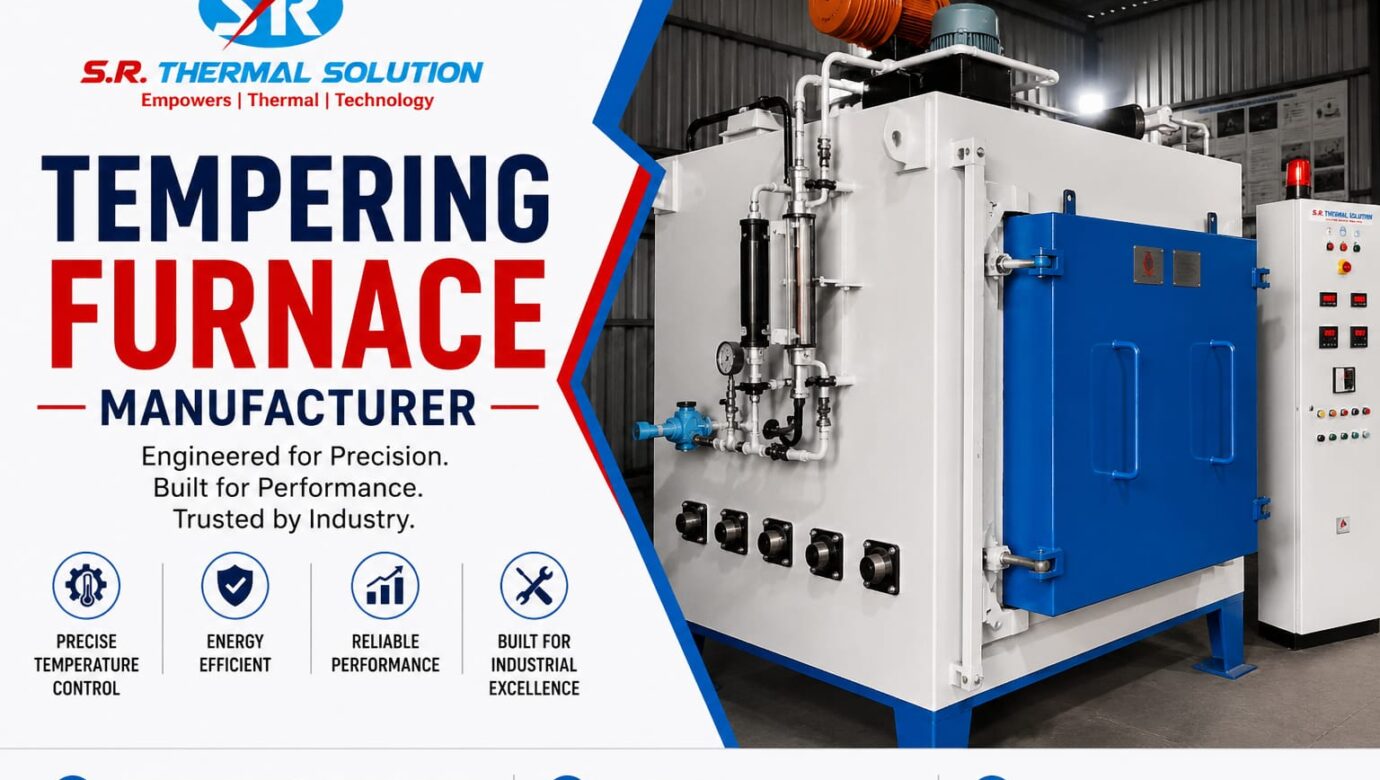
Tempering Furnace Manufacturer: The Complete Guide to Choosing the Right Heat Treatment Partner
Everything you need to know about tempering furnaces — how they work, the types available, and how to pick a manufacturer you can trust
If you’re searching for a tempering furnace manufacturer, chances are you already know how critical this step is in your production line. A poorly built or poorly calibrated tempering furnace doesn’t just slow down output — it can compromise the strength, hardness, and durability of every part that passes through it. In industries like automotive, aerospace, and tooling, a single inconsistent batch can mean failed quality inspections, costly rework, or worse, a part failure downstream that damages your reputation with clients.
This guide breaks down exactly what a tempering furnace is, how it works, the types available, what separates a reliable manufacturer from the rest, and how to avoid the costly mistakes that trip up first-time and even experienced buyers. Whether you’re replacing aging equipment, scaling up production, or sourcing your very first industrial furnace, this article is built to answer every question you’ll need before making a purchase decision.
In this guide:
- What a tempering furnace is and why it matters
- How the tempering process actually works, step by step
- The six main types of tempering furnaces and when to use each
- A full side-by-side comparison table
- What to look for in a manufacturer (with a buyer’s checklist)
- Real-world applications across industries
- Cost factors that affect pricing
- Energy efficiency considerations
- Common mistakes to avoid
- Maintenance best practices
- A glossary of key terms
- 10+ frequently asked questions
What Is a Tempering Furnace?
A tempering furnace is an industrial heat treatment system used to reduce brittleness in hardened steel and other metals after quenching. During the tempering process, metal parts are reheated to a controlled, specific temperature — held there for a set duration — and then cooled in a regulated manner.
This process relieves internal stresses caused by rapid cooling during quenching and adjusts the final balance between hardness, strength, and ductility.
Without tempering, hardened steel is often too brittle for practical use. A properly engineered tempering furnace gives manufacturers precise control over temperature and time, which directly determines the final mechanical properties of the material.
Why Tempering Matters at the Metallurgical Level
When steel is quenched, its internal structure transforms into martensite — a hard but extremely brittle crystalline structure formed by rapid cooling. While martensite provides excellent hardness, it’s also full of internal stress and prone to cracking under load or impact.
Tempering addresses this by allowing controlled diffusion within the metal’s structure. As the part is reheated below its critical transformation temperature, some of the martensite converts into more stable structures like tempered martensite, which retains much of the hardness while significantly improving toughness and reducing the risk of stress cracking.
This is why tempering isn’t optional for most hardened steel applications — it’s the step that makes hardened parts actually usable in real-world conditions, from a wrench that needs to flex slightly under torque to a gear tooth that needs to absorb repeated impact without shattering.
How Does a Tempering Furnace Work?
A tempering furnace works through three core stages:
- Heating – The metal part is loaded into the furnace chamber and heated to a specified tempering temperature, typically anywhere from 300°F to 1400°F depending on the desired outcome.
- Soaking – The part is held at that temperature for a set period, allowing heat to penetrate evenly and relieve internal stress throughout the material — not just at the surface.
- Cooling – The part is cooled in a controlled manner, either in still air or through a regulated cooling cycle, locking in the desired hardness and toughness.
The relationship between temperature and time is critical here: higher tempering temperatures increase ductility but reduce hardness, while lower temperatures preserve strength and hardness but reduce ductility. This is why furnace calibration and consistent temperature control matter so much when selecting a tempering furnace manufacturer — even small fluctuations can throw off an entire production batch.
Types of Tempering Furnaces
Not all tempering furnaces are built the same. The right type depends on your production volume, part size, and energy source. The most common types include:
- Electric Tempering Furnace – Offers precise, consistent temperature control and is well suited for smaller to mid-sized operations that prioritize accuracy.
- Gas-Fired Tempering Furnace – Common in high-volume industrial settings due to lower operating costs at scale.
- Batch Tempering Furnace – Processes a fixed load of parts per cycle; ideal for operations with varied part sizes or lower daily throughput.
- Continuous Tempering Furnace – Designed for high-volume, non-stop production lines where parts move through the furnace on a conveyor system.
- Pit-Style Tempering Furnace – A vertical, top-loading design often used for longer or irregularly shaped parts.
- Vacuum Tempering Furnace – Used when oxidation or scaling must be eliminated entirely, common in aerospace and precision metal applications.
Each type serves a different production need, which is why working with an experienced tempering furnace manufacturer matters — the right guidance up front prevents costly mismatches down the line.
Tempering Furnace Types Compared
Here’s a quick side-by-side comparison to help you narrow down which tempering furnace fits your operation:
|
Furnace Type |
Best For |
Energy Source |
Typical Volume |
Key Advantage |
|
Electric Tempering Furnace |
Small to mid-sized shops |
Electricity |
Low to medium |
Precise, consistent temperature control |
|
Gas-Fired Tempering Furnace |
High-volume industrial plants |
Natural gas / propane |
High |
Lower operating cost at scale |
|
Batch Tempering Furnace |
Mixed part sizes, lower daily output |
Electric or gas |
Low to medium |
Flexibility across different loads |
|
Continuous Tempering Furnace |
Non-stop production lines |
Electric or gas |
High |
Maximum throughput, minimal downtime |
|
Pit-Style Tempering Furnace |
Long or irregular parts |
Electric |
Low to medium |
Efficient use of vertical floor space |
|
Vacuum Tempering Furnace |
Oxidation-sensitive parts |
Electric |
Low to medium |
Scale-free, oxidation-free finish |
If you’re unsure which fits your operation, a good rule of thumb: match the furnace type to your daily part volume first, then refine based on part shape and finish requirements.
Buyer’s Checklist: What to Ask Before You Choose a Tempering Furnace Manufacturer
Before signing off on a supplier, run through this checklist:
☐ Does the furnace offer temperature uniformity within ±5°F or better across the full chamber?
☐ Is the control system PLC-based with data logging for quality traceability?
☐ What’s the average lead time from order to installation?
☐ Does the manufacturer provide on-site installation and operator training?
☐ Are spare parts stocked locally, or will you be waiting on international shipping?
☐ What’s the average response time for technical support if the furnace goes down?
☐ Can the chamber size and heating capacity be customized to your part dimensions?
☐ Does the furnace meet relevant safety certifications for your region (CE, UL, etc.)?
☐ Can they provide references or case studies from your specific industry?
☐ What’s included in the warranty, and how long does it last?
Walking into a supplier conversation with this list in hand puts you in a much stronger negotiating position — and quickly separates serious manufacturers from resellers who don’t actually understand the equipment they’re selling.
Key Features to Look For in a Tempering Furnace Manufacturer
When evaluating a tempering furnace manufacturer, a few factors separate reliable suppliers from the rest:
- Temperature uniformity and control – Look for furnaces with tight temperature tolerances (ideally ±5°F or better) and digital PLC-based controls.
- Build quality and insulation – Proper insulation reduces energy loss and improves consistency across long production runs.
- Customization options – Your parts, volumes, and floor space are unique; a good manufacturer should offer configurable chamber sizes and heating capacities.
- After-sales support – Furnace downtime is expensive. Manufacturers offering fast technical support, spare parts availability, and installation assistance are worth prioritizing.
- Certifications and compliance – Ensure the furnace meets relevant industry safety and quality standards for your region.
- Track record – Ask for case studies, client references, or existing installations in your industry.
Common Applications of Tempering Furnaces
Tempering furnaces are used across a wide range of industries. Here’s how the process plays out in practice across a few of the biggest ones:
Automotive component manufacturing – Gears, axles, crankshafts, and fasteners all rely on precise tempering to withstand repeated stress cycles without fatiguing or cracking over the life of the vehicle. Automotive suppliers often run continuous tempering furnaces to keep pace with just-in-time production schedules.
Aerospace parts production – Where failure isn’t an option, aerospace manufacturers often use vacuum tempering furnaces to eliminate surface oxidation entirely, ensuring parts meet extremely tight tolerances for both dimensional accuracy and material integrity.
Tool and die manufacturing – Cutting tools, dies, and molds need a very specific hardness-to-toughness ratio. Too hard, and the tool chips; too soft, and it wears out fast. Precise, repeatable tempering is what makes tool steel usable in production environments.
Fasteners and hardware production – Bolts, screws, and other high-strength fasteners are tempered in high volume, typically using batch or continuous furnaces designed for throughput without sacrificing consistency across thousands of parts per run.
Springs and wire manufacturing – Springs need to flex repeatedly without losing their shape or snapping — a direct result of controlled tempering that balances flexibility with strength.
General metal fabrication and heat treatment service centers – Third-party heat treatment providers often run a mix of furnace types to serve varied client needs, from one-off custom jobs to long-running production contracts.
What Affects Tempering Furnace Pricing?
Tempering furnace costs vary significantly, and understanding what drives that price helps you evaluate quotes more accurately. The main cost factors include:
- Chamber size and load capacity – Larger chambers that handle bigger or higher-volume loads cost more upfront but can reduce cost-per-part at scale.
- Heating method – Electric furnaces often have a different upfront cost profile than gas-fired units, though operating costs can shift the total cost of ownership significantly over time.
- Control system sophistication – Basic analog controls cost less than advanced PLC systems with data logging, recipe storage, and remote monitoring capabilities.
- Automation level – Manual loading/unloading is cheaper initially than automated conveyor or robotic loading systems, but automation pays off in labor savings for high-volume operations.
- Customization – Standard, off-the-shelf furnace models are typically less expensive than furnaces custom-engineered around unusual part shapes or specific process requirements.
- Certifications and compliance – Furnaces built to meet specific regional safety or industry certifications may carry a premium but are often non-negotiable depending on your industry.
- Installation and commissioning – Some manufacturers include installation and startup support in their pricing; others charge separately, so always clarify what’s bundled into a quote.
When comparing quotes from different tempering furnace manufacturers, make sure you’re comparing like-for-like specifications — a lower price often means a smaller chamber, fewer control features, or reduced warranty coverage, not necessarily a better deal.
Energy Efficiency Considerations
Since tempering furnaces often run for extended cycles, energy consumption adds up fast over a furnace’s operating life. A few factors worth discussing with your manufacturer:
- Insulation quality – Higher-grade insulation materials reduce heat loss and shorten the time needed to reach target temperature, cutting energy use per cycle.
- Recuperative or regenerative burners (for gas-fired units) – These systems recycle exhaust heat back into the process, improving fuel efficiency.
- Load optimization – Running the furnace at full capacity per cycle, rather than partial loads, improves energy efficiency per part processed.
- Standby and idle settings – Furnaces with smart standby modes reduce energy waste during downtime between cycles.
- Preventive maintenance – A furnace with worn seals or degraded insulation works harder to maintain temperature, driving up energy costs over time — another reason regular maintenance pays for itself.
Asking a prospective tempering furnace manufacturer about energy consumption per cycle, not just purchase price, gives you a much more accurate picture of long-term operating cost.
Common Mistakes to Avoid When Buying a Tempering Furnace
Even experienced buyers run into these pitfalls — worth checking against before you finalize a purchase:
- Undersizing the chamber. Buying a furnace that just barely fits your current part sizes leaves no room to grow or take on new contracts.
- Ignoring energy costs long-term. A cheaper gas-fired unit might cost more over 5 years than a slightly pricier electric furnace, depending on your local energy rates and run hours.
- Skipping the site visit or demo. Specs on paper don’t always match real-world performance — ask to see the furnace running, or request a reference client you can call.
- Overlooking maintenance requirements. Some furnace designs require more frequent element replacement or recalibration than others; factor this into total cost of ownership, not just the sticker price.
- Choosing based on price alone. The cheapest tempering furnace manufacturer is rarely the cheapest option once downtime, poor uniformity, and rework costs are factored in.
Maintenance Tips to Extend Your Tempering Furnace’s Lifespan
A well-maintained tempering furnace can run reliably for well over a decade. A few habits that make a real difference:
- Calibrate thermocouples regularly to catch temperature drift before it affects part quality.
- Inspect door seals and insulation periodically, since worn seals let heat escape and increase energy costs.
- Keep the chamber clean of scale buildup, which can affect airflow and heating uniformity over time.
- Log every cycle (temperature, duration, load) so you can spot patterns before a failure happens rather than after.
- Schedule preventive maintenance with your manufacturer rather than waiting for a breakdown — most offer service contracts that pay for themselves in avoided downtime.
Glossary of Key Tempering Furnace Terms
A quick reference for terms you’ll come across when researching or purchasing a tempering furnace:
- Quenching – The rapid cooling of heated metal (usually in oil, water, or air) to achieve maximum hardness before tempering.
- Martensite – The hard, brittle crystalline structure formed in steel during quenching.
- Soak time – The duration a part is held at the target tempering temperature to allow even heat penetration.
- Thermocouple – A sensor used to measure and monitor furnace temperature.
- PLC (Programmable Logic Controller) – The digital control system that automates and monitors furnace heating cycles.
- Temperature uniformity – How evenly heat is distributed throughout the furnace chamber, usually expressed as a tolerance range (e.g., ±5°F).
- Draw temperature – Another term for tempering temperature, often used interchangeably in industrial settings (“drawing the temper”).
- Recuperative burner – A gas burner system that recycles exhaust heat to improve fuel efficiency.
- Batch load – A single group of parts processed together in one furnace cycle.
Case hardening – A related but distinct process that hardens only the outer surface of a part, sometimes followed by a separate tempering step
Annealing softens metal by heating it to a high temperature and cooling it slowly, primarily to improve workability. Tempering, on the other hand, is performed after quenching to reduce brittleness while preserving much of the hardness gained during the hardening process.
Tempering temperatures typically range from 300°F to 1400°F, depending on the metal type and the desired balance of hardness, strength, and ductility.
A common industry guideline is roughly 1–2 hours of soak time per inch of material cross-section, though this varies by furnace type and material.
Some furnace models are versatile enough to handle stress relieving, preheating, and low-temperature annealing in addition to tempering, though dedicated equipment is recommended for high-precision work.
Pricing varies widely based on size, heating method, and automation level — smaller electric batch furnaces start in the lower range, while large continuous or vacuum systems can run significantly higher. Getting a custom quote based on your part specs and volume is the most accurate way to budget.
A quenching furnace rapidly cools heated metal to lock in hardness, often the step immediately before tempering. A tempering furnace then reheats that hardened metal to a lower, controlled temperature to reduce brittleness — the two processes work together, not interchangeably.
Start with your largest part dimensions and your maximum expected batch size, then add a buffer for future growth. A good manufacturer will help you calculate chamber size based on your actual production data rather than guesswork.
Neither is universally “better” — electric furnaces typically offer tighter temperature control and are easier to install, while gas-fired units tend to cost less to run at high volumes. The right choice depends on your production scale and local energy costs.
Most established tempering furnace manufacturers offer both. Standard models are faster to deliver and less expensive, while custom builds are worth considering if your part dimensions, production volume, or process requirements fall outside typical off-the-shelf specifications.
Look for over-temperature protection, automatic shutoff systems, proper ventilation or exhaust handling, insulated exterior panels to prevent burns, and clear emergency stop controls. If your facility handles hazardous materials or works under strict regulatory oversight, confirm the furnace meets applicable regional safety codes before purchase.